Lemon Shark in Bora Bora

Lemon Shark in Bora Bora
Showing posts with label Steve Easton. Show all posts

Tuesday, July 12, 2011

Scuba Diving Palancar Reef - Cozumel, Mexico


Palancar- Cozumel Mexico

Just about every diver who makes the trip to the beautiful Island of Cozumel has the chance to dive the Palancar Reef.  The reef itself is quite a large reef and there are actually several separate but equally enjoyable Palancar dives. 

  You can take a charter from anyone of the numerous dive shops right on the island but also you can make the trip from the mainland right from Playa Del Carmen it’s just a longer boat ride.  Don’t let the boat ride scare you off because in one of my earlier blogs I shared the story of an unexpected encounter with a whale shark on this very boat ride.

  As I was saying the Palancar reef offers several different dives that cater to every level of diver.  Palancar Gardens is a shallow dive only 35’-67’ with great visibility and almost no current.  Here you will find hundreds of corals of every color imaginable and a large selection of sponges.  All the while you are courted by a multitude of colorful reef fishes.  A truly fantastic dive for a beginner or a good refresher but also enjoyable by the most seasoned divers. 


The Palancar Bricks is another popular dive however because it reaches depths of over 90’ it is usually reserved for advanced level divers.  Aside from the depth it is a relatively easy dive with incredible visibility over 100 feet and almost no current.  This site is also highlighted by the abundant healthy corrals to be found.  Huge coral formations erupt from the sandy bottom and this is a great place to spot eagle rays, turtles and often time reef sharks.  The coral continues to impress as you ascend. 


  Cleaning stations are a common site and it is always fun to watch the shrimp work their magic by removing parasites from turtles or rays.  A very enjoyable dive.  My favourite dive on Palancar by far has to be the Palancar Caves.  Huge coral formations create a vast array of caves, caverns and buttresses. Larger sea life is commonplace and this is a popular spot for photographers.


  Rays, Sharks, Turtles, eels, they are always here for your viewing pleasure.  It is a fairly deep dive again over 90’ but it still has little current and offers a diver some excellent visibility.  The coral is all very healthy and the local guides do a very good job educating divers on conservation.  Gloves are prohibited to discourage touching and buoys are permanently place to avoid anchor damage insuring that the great dive sites on Palancar reef will be available for years to come.

  You can easily dive 6-8 dives on this reef and not see it all.  I only had 3 dives and when I return I will be sure to explore the reef further.  Many a diver count Palancar among the top dives in the world and for very good reason.  I would recommend these dives to all.

Scuba Diving Kedah National Marine Park - Langkawi Malaysia

Palau Segantang- Kedah National Park Malaysia


Around 20 miles north of the port city Penang in the beautiful country of Malaysia is the Kedah National Marine Park. 

 The Malaysian Government has declared the park a protected area since 1985 and prohibits fishing.  The park consists of 5 Islands (Palau’s) with the main Island Langkawi hosting a Visitor Center, an underwater observatory some of the nicest beaches you will find in all of Malaysia.


  Palau Segantang has some bungalows that can be rented at a very low price.  The fact that the Island has no fresh water and all water is collected by park staff who use a series of tarps, and barrels to collect the rainwater may contribute to the low cost of accommodation.

  Something you can see here that I have never seen before is the Flying Fox.  It is sort of a cross between a bat and a dog.  They are actually part of the bat family and they are the largest bats in the world.  They can have a wingspan of up to 6 feet across and only weigh between 3-5 lbs.  They do not eat meat they eat fruit mostly.  However to see these large creatures fly around and land in a tree then use their hands to crawl and climb is just a little creepy.  They have been considered a delicacy by some cultures and are now on the endangered species list.  It has nothing to do with diving but I really enjoyed seeing them and felt it was worth mentioning.


  Back to diving.  Langkawi itself has no diving to speak of but there are several small islands within the park that have some magnificent dive sites. 

 One of the best known and frequently dived is Palau Segantang.  Located just west of the Island of Palau Payer, another popular dive destination Palau Segantang offers two corral pinnacles that rise from the seafloor from just less than 100’ of depth.  There is a slight current but the visibility is fantastic. 


 The Pinnacles attract a large variety of sea life such as Turtles, barracuda, eel, several varieties of jacks, large nurse sharks, seahorse, some pacific lobster, and many other varieties of fish.  It is also a great place to go to see many different types of soft corrals.


   When you leave the boat you descend to about 95’ to a sandy bottom.  Then you start to work your way back to the surface all the while admiring the many forms of life who call this formation home.  There are several swim throughs to enjoy while you work your way up.  It is an advanced level dive because of the depth and sometimes the visibility can be disturbed by the many ships that pass through the area on the Straits of Malacca. 

  However this site is an excellent 2 tank dive.  There are several day charters that make runs to the area as well as a few live boards that offer repetitive dives throughout the park.  Watch your air and time your dive properly so you don’t use your air at the beginning of the dive.  Beginner divers also frequent this site but they start the dive by descending to 60’ and working up from there.  Still a very enjoyable dive however the nurse sharks tend to stay closer to the bottom so they may well be missed. 

  Overall a very enjoyable dive that is sure to impress any diver of any level.  Bring your camera you are certain to get some great shots.

Scuba Diving Ginnie Springs, High Springs-Florida, USA


Florida
is home to many amazing things.  Amazing beaches, amazing cities, amazing theme parks, and some pretty amazing dive sites.  For a diver you have an abundance of choices. 

The corals and wrecks of the Keys, the Gulf of Mexico, endless rivers and inland lakes, or one of my all time favorites the caves.  There are several major cave systems in central Florida that are available to divers.  I had the pleasure to visit a great spot called Ginnie Springs.  Ginnie Springs is located in a Town called High Springs that is located West of Jacksonville and North of Gainsville.  It is almost between the Atlantic Ocean and the Gulf of Mexico. The street address is
7300 Ginnie Springs Rd. High Springs, Fla.
  They offer a full service dive shop, picnic area, camping sites and access to one of the largest cave systems in North America. The water is crystal clear and stays a constant 72 *F all year round.

  Jacques Cousteau visited here once and stated it had “Visibility forever”

To access most of the sites available at Ginnie Springs you need to be able to show proof of having completed Cave and Cavern training from a recognized training agency.  If you don’t have a cave card they will issue you an open water wristband and you will only be allowed in certain spots.  If they find you wandering into places you are not qualified to be in they will ask you to leave the park. 

 I had yet to take any Tech or Cave training when I visited here so I was limited to the open water locations as well.  They do host several instructors who provide training on site but I am sure you would need to make arrangements with them before you show up.  I was pretty happy just diving what they call the ballroom.

  The Ballroom is located right behind the dive shop.  There is a large parking lot and picnic area with BBQ’s and tables.  There is easy access to a small shallow basin that is a great place for swimming or snorkeling.  The basin empties into the Santa Fe River and I think you can rent an inner tube for a little float down the river. 


Just inside this basin you will see a large opening in the limestone.  Welcome to the ballroom.  There is a lot of natural light that gets in through the entrance but you want to bring a light to explore the whole cavern because there are some dark spots. 


 If you go straight in and go down to the bottom right of the cavern you will see a small steel grate that covers the aquifer that supplies 35 million gallons of warm clear water to this spring every day.  If you approach the grate head on you will exhaust yourself swimming into the torrent and just float away so you need to go to either side of it and move sideways until you are directly in front of it.  You can hold on to the grate and feel the power of the water as it rushes past and then let go and be swept back into the cavern, it is far safer than it sounds a pretty fun thing to do actually.

  The deepest point in the cavern is about 50’ deep.  And it is large enough to explore on a single tank dive.  There was not much life to see just a couple small fish and a river eel that was about 3 ‘long.  For someone who has never been in a cave or cavern this is a great place to go.  Further down the Santa Fe you will find the entrance to the Devil’s Springs caves. 


 There are two systems the Devils Eye that has several thousand feet of caves and opens into the second system, the Devil’s ear it is a much larger and deeper cave system and many people have died in here.  There are grates in place and signage to warn you that without the proper training and equipment divers are forbidden to enter.  They do not allow open water divers to have a light with them to further discourage you from wandering into a place that you should not be in. 

This is a great place to spend a day diving or if you are so motivated take some cave training.  Though it is more suited to experienced cave divers an open water guy like me can still have a great time.  So put this on your list if you want to try something a little exciting and different from a regular open water dive.  You won’t regret it.

Wednesday, July 6, 2011

A Chance Encounter- Scuba Diving with a Whale Shark in Cozumel Mexico


As divers we are all aware of the many things that can come up to change our plans.  Weather, mechanical issues with a boat, equipment problems, illness, sometimes even the best laid plans have some unexpected surprises. 

 One of my most memorable dives was due to an unplanned surprise.  I was on a boat headed out to Palancar just off Cozumel Mexico.  We were leaving from the mainland so it was to be about a 45 minute trip.  The weather was terrific, the water was calm everything looked to be going according to plan.  However after only 10 minutes or so I felt the boat suddenly stop and the engine shut down I knew something was up. 

 Our Mexican Captain left the wheelhouse yelling something in Spanish that I did not understand but I can see he was excited.  All I could hear was “Get in the water” and that was all I needed.  While the other divers were asking what was wrong I already had my BCD on my back and my mask in place and with my fins in hand I was just preparing to jump when two things happened.  First I heard the word “Shark” and at the same time I saw the dark silhouette of what appeared to be a semi truck go under the boat. 

 Well this great lakes diver has seen every Jaws movie ever made and at that time had not had the opportunity to see a shark in the wild so needless to say I was no longer in much of a hurry to get into the water.  I was wondering if this was some sort of attempt to extort money from tourists the old “pay up or we feed you to the sharks routine” I don’t think that has ever happened but I was thinking it might be happening now. 

 As more people saw the ominous shape emerge from under our boat I heard the excitement growing and heard “whale shark, whale shark”.  By this time a second diver was geared up and ready to make the plunge.  He looked at me and said “Go ahead”, I have read about whale sharks and how they were gentle giants but I was not ready to be the first one in the water with something that big.  “You first” I replied.  He smiled at me and I could tell that he was having the same thoughts that I was, “Let’s go together” he said well that was good enough for me. 

 I rolled over the side and was pretty relieved to see the bubbles beside me from the other diver splashing in, I was a little concerned that he would renege on our deal and leave me alone with this monstrously big creature.  As I was securing my fins I could see the tail fin just disappearing into the blue.  Honestly I felt relieved.  I was not a coward I went in the water but I was not very sad to see the beast swim away. 

 For a couple seconds I thought my shark encounter was over. Then I saw the outline again.  This time it was not a tailfin but a huge gaping mouth that looked like it had the girth to swallow us both whole.  Man I was scared.  Bear in mind I was not an experienced saltwater diver at the time and had never seen a single shark except in an aquarium so I’m not ashamed to say hell ya I was scared. 

My new dive buddy put both his hands up in the air like he was signaling me to surrender.  No problem there I mimicked his maneuver and threw both my hands up high.  We were only a few feet from the surface and we were side by side as this graceful creature, slowly glided by us and gently rubbed against us as she passed.  The adrenaline, the excitement, the fear it was all of these emotions at the same time. 

 To this day I believe that she was well aware of our presence because she stopped her huge tail as she slid by as if not to harm us.  Then in a slow purposeful arc she reversed course and came back and again gently rubbed us as she passed on the other side.  It reminded me of a cat walking between my legs in a figure eight pattern rubbing against me.  Only this cat was about 42 feet long and at weighed at least 10 tons.

  By this time a few other divers had joined us in the water and the shark was now dividing her time equally among her new friends.  People were taking photo’s petting her and I watched as our dive master slipped beneath her and seemed to get pulled along in her wake all the while rubbing her belly with both hands in a circular pattern. 


 This trick I even attempted myself as my courage grew.  It was an amazing almost religious experience that something this large could be as gentle as it was.  Within 20 minutes of my heroic leap into what I was sure were the very jaws of death several other boats had arrived and there were probably 25 or more divers in the water all swarming to get a chance to touch this magnificent animal.  Then as suddenly as she came into my life she left.  I saw her heading down into the blue depths with a few divers trying to follow then she was gone.  But the man she left behind was changed forever by our 25 minute love affair. 


Whale sharks are the biggest fish in the world they are said to grow to be up to 50 feet in length and some say as big as 60 feet and 12-14 tons.  They are prehistoric and date back 240 million years to the Jurassic period.  They have over 3000 teeth yet they are filter feeders they open their mouths while swimming or sometimes while they hover vertical in the water they and suck in huge amounts of water and expel it through 5 gill slits located on either side of their body. 

Their backs are covered in light colored spots and each whale sharks spots are as unique as our fingerprints.  Scientists are building a database to record and track individual whale sharks using this pattern. They live between 70-100 years and they tend to follow the same route of migration. Cozumel is a regular destination for feeding and mating and whale sharks can almost always be found there between June and mid September.  I have repeatedly referred to the shark I was with as a female and I know this because the males have 2 claspers located near the pelvic fin.  She did not.

 I was told that my encounter was a very rare encounter because it was in December long after the usual migration and it happened much closer to the mainland than they are usually ever spotted.  I like to think that she came there to meet me personally and become yet another great reason why I love my underwater world as much as I do. 

Yes I was afraid, very afraid until I saw that this lovely lady of the deep had no intentions on hurting me only to be admired and caressed.  I think every diver should book a trip to Mexico between June and September to experience this wonder for them. 

There are few things I have ever seen or done that have moved me the way this particular dive did.  Man I love this sport!

Saturday, July 2, 2011

Shooting the Tiputa Pass- Scuba Diving in Rangiora French Polynesia


Rangiroa meaning “Vast sky” in Toamotuan is located roughly 350 km north of Tahiti and is part of the Tuamotu island group. 

  It is recognized as the largest atoll in the southern hemisphere and is home to the second largest lagoon on the planet.  It is made up of just over 400 individual motu, small islands, and mere sandbars forming a slipper shaped rim around a turquoise lagoon so large it has it’s very own sunset. 

  The population of just under 2,500 people live almost exclusively on the two large islands at the north end of the lagoon near the Tiputa pass.  The lagoon’s crystal clear water is only around 100’ at its deepest and is home to several different breeds of sharks, including Black tip reef, white tip reef, hammerhead, and the odd tiger shark as well as many rays, manta, turtles, jacks, hump head wrasse, or as some people know them Napoleon fish and so many breeds of smaller fish I could go on forever. 


 There are 2 passes the Tiputa pass and the Avantura pass.  It is a pretty remote location but has its own airport and regular Air Tahiti flights bring adventure seekers several times a week.

  Tourists are welcomed in hotels such as Kia Ora Village, the Novatell and also by many Pensions (bed and Breakfasts) located in the main town centers of Tiputa, Ohutu, Avatoru, Taeo'o, Fenuaroa, Otepipi and Tevaro. 

  There are several notable dive sites in Rangiroa and the site I am choosing to write about today is considered to be one of the top ten dive sites in the world. 

  The Tiputa pass is a channel of water that circulates the water in this lake sized lagoon.  Currents in the pass can reach as much at 5 knots if the tide is at its peak.  It is considered to be an advanced level dive for this reason alone. How we usually shoot the pass is leaving the lagoon go to the right hand side near the old Spanish church to exit the pass. 

  You can get some pretty serious waves and as I said the current is pretty harsh but if you hug the shoreline on the right hand side you can pick up a back eddy and it is a pretty smooth ride.  Follow the shoreline out and around the corral reef still keeping to the right.  Head down the outside of the reef until you are even with the remains of a large burned out building with the tallest palm tree on the atoll.  This is maybe ¼ mile from the pass itself. Come in close enough to the reef that you can see the bottom is only about 40 feet below you. 

  The reef drops off pretty quick and depths get over 2000 feet pretty close to the reef itself so get in close enough so you don’t miss the wall.  There are no buoys marking the drop point and we used this spot because it gave us maximum bottom time on the reef before you shoot the pass.

  I would usually drop in negatively buoyant and get everyone together on the bottom.  There can be strong surface currents and waves but you will be fine when you get below the surface.  This is usually the hardest part of the dive.  If you miss the wall don’t abort.  You can still enjoy the dive in open water at a depth of about 60-70 feet.  Dolphins frequent that area and it a great place to see dozens of sharks and giant Manta rays as well.  Don’t worry you can not miss the pass if you tried.

  If all goes well and you are on the wall it is a great drift dive at 50-60 feet.  The coral here is relatively untouched by the crown of thorns and in very good shape.  Turtles feed in the area and you will often see large schools of barracuda some as much as 65lbs or more.  Big napoleon fish are usually present and this is where I saw my very first hammerhead, some marlin, and I even had a few dolphin encounters right along this wall.  Remember not to just focus on the reef, look around you, look out to the sea and also look down as the wall drops deeper.  This is where you will very often see giant manta shadowing you as you drift along.

   It’s tempting to go a little deeper to see what is out there but this dive is so incredible that you really want to conserve air to get every last minute of bottom time you can.  So essentially just let the current guide you. 

  You will see the wall level out and at the same time you will feel yourself getting pulled into the pass.  Keep looking all around you, mantas, dolphins, sharks, I have heard you can sometimes see whales though I never saw any here myself, and schools fish numbering into the thousands. Triggerfish you name it and its here on this dive.

   Keep watching your air and try to keep to your left as much as possible.  You don’t want to have to surface in the middle of the pass.  Large waves can be present and there is a lot of boat traffic above you so stay to the left as much as you can.  I always brought a lift bag or sausage along with me and when I got to about 900 psi I would send it up so that the boat can find us easily.  Some people use a flag for the entire dive but I like to keep my hands free as much as possible.  Bare in mind you will have a local guide and he will worry about that. 

  Right about this point in the dive you will notice the current dissipates and if you timed it well you should be looking to do a safety stop anyway.  Keep drifting on your safety stop and when you surface at 500 PSI (or more) your boat should be close by to pick you up. 

  Like I said this dive is on the list of top dives worldwide and if you get the chance do it.  Timing is key here you need the tides working with you.  I have done this dive at least 25 times and not always at the right time.  It is still a great dive but if the tide is going out you will never make it through the pass and you can get caught up in currents that can take you out to sea. 

  It is an advanced dive but there are a few excellent dive shops on the island and they know this dive well and will take great care of you.  I have seen divers with nothing more than the 4 open water dives they did during training do this dive.  I would have to say that this dive is everything they say it is and more. 

Friday, July 1, 2011

Scuba Diving Motu Tapu Bora Bora, French Polynesia


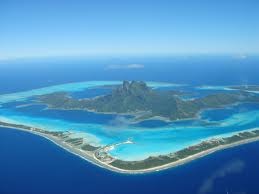
Bora Bora, just the name alone stirs images of beauty, romance, and adventure and rightly so.  You would be hard pressed to find a more beautiful setting in the world.

 I had the pleasure to live in French Polynesia aboard the Tallship Star Flyer for about 8 months leading groups of divers from all over the world.  I logged hundreds of dives in locations like: Tahiti, Bora Bora, Moorea, Huahine, Tahaa, Raiatea, Rangiroa, and Fakarava, but I want to start with one of my all time favorites.

 Bora Bora, The Pearl of the Pacific, is located in the Society Archipelago.  This of one of 5 (sometimes 6) island groups that make up French Polynesia.  Society Islands, Marquesas Islands, Austral Islands, Tuamotu Islands, Bass Islands (often considered part of the Tuamotu’s), and the Gambier Islands.
A little history of French Polynesia.  The roughly 118 islands, Motu, and atolls that together form what we call French Polynesia are home to just under 275,000 people.  Over 60% of who reside on the Island of Tahiti.

These islands were formed around 5-6 million years ago by volcanic activity in the region.   The region was claimed by the French in 1842 and declared a French Protectorate, in 1946 it was re-declared an Overseas Territory of France and most recently in 2004 it was designated a French Overseas Collectivity.  This basically means that it has its own local assembly and government but ultimately it is part of France.  First discovered in 1521 by Ferdinand Magellan of Portugal and later was explored by, among others Captain James Cook of England.

The Polynesian language does not have the letter B and the true name is Pora Pora meaning “first born” as it is said that it was the first Island that the god Taaroa pulled from the turquoise seas. Cook’s Bay today is a pristine port located on the Island of Moorea.  

During the Second World War Japan had planned to make the area part of its own empire and American forces established a supply base on Bora Bora.  Approx. 5,000 American troops and about 20 American ships fortified with multiple cannon established at strategic points around the island in what was called “Operation Bobcat” Many of these cannons are still present today on majestic Mount Otemanu the remains of an ancient volcano that is the centre point of this Island gem, and those gun placements are a popular site tourists still visit.  Well a Japanese attack never occurred and I have heard it said it was the best place to spend the war.  According to a local I met on the Island the biggest medical concerns were “sunburn and syphilis” and at the wars end many of the troops remained behind with their Polynesian wives. 

Bora Bora was the setting for the famous Rogers and Hammerstein musical “South Pacific” and today many visitors still visit the local landmark “Bloody Mary’s”  bar which is one of the oldest business’ on the island and has it’s own dock on the breathtaking lagoon.  Tourism, vanilla, coconuts, and the famous black pearls drive the local economy.
  The people are very friendly and at first encounter many North Americans are unsure how to take it.  It is not uncommon at all for a local to sit down beside you on the beach and start talking to you like they are a long lost friend.  You will not often be harassed by merchants, peddlers, and time share bandits.  In fact if you do choose to browse the local shops and booths in many cases you will just get a pleasant smile and they tend to wait for you to ask them questions.  However anyone you meet will have a friend with a small Pearl Farm where you can find deals well below the cost of most of the larger jewelers and pearl exchange. 

 I myself made a good friend, Ray an American surfer, and diver in Huahine that came to the Island in the 1990’s chasing the perfect wave and the endless summer.  He fell in love with the Island and also met his wife and started a family.  He runs a small pearl farm and has build a quaint little shop in a huge tree in his backyard he calls “The Pearl Tree house” I found him to be a good honest man and his pearls were about 1/3 of the cost you will find them in the Capital of Papeete.  Hey Ray there’s a plug for you buddy! 

 Now that I have shared a little bit about this south pacific marvel let’s get to the good stuff, the diving!  Where do I start?  I guess I will start with the best known dive site Motu Tapu located just east of the Pass, which is the only way into or out off the lagoon.  This site is anywhere from 30’ to a max 125’ though most of the dive can be done at 30-40’ for max bottom time and you really won’t see any more at a deeper depth.  The site is marked with multiple buoys and is a popular spot for shark and ray feedings and snorkelers.  The visibility is well over 100’ and the coral in incredible. 

 They have had an ongoing problem with “Crown of Throne” it is a starfish type invasive species that tends to ravish the local coral.  However the locals are doing all they can to preserve this resource.  When you pull up your French local guide, present on every dive as dictated by French law, will secure the boat to one of the moorings and shut the motor off.  This action tends to produce an effect I call Pavlov’s sharks.  Because this is a popular shark feeding location the sharks are conditioned to the sound of the boat motors and when the shut down they know it is dinnertime.  You will usually see 5-10 black tip reef sharks measuring 3-5 feet in length they usually stay mid-column and will follow you throughout the dive.  They have yellowish eyes and I honestly was a little afraid of them for my first dozen dives or so, but really harmless they just add to the excitement. 

 On the bottom are the real stars of the shows.  Large lemon sharks 10-14” in length patrol the sea floor usually 3-5 of these beautiful fish can be seen at any time during the dive and make a great photo opportunity.  No there are no cages, or chain mail, boom sticks or James Bond types with harpoon guns protecting you.  You don’t need them.  Believe me the sharks really have no interest in you at all. 

It is pretty scary and I remember my first dive with them.  Before we went out I was lowering my Zodiac from the davit on my ship.  The bowline was caught up on some gear and I gave it a big pull, well it came free and I launched it at my head and the carabineer on the end struck my forehead and I started to bleed.  I knew this was a shark dive and I have heard how the sharks will be jolted into a feeding frenzy by the presence of blood so I went to our local guide Terry.  “Hey Terry I just cut myself and I am bleeding here should I still dive?”  he looked at me and said in his strong French accent “are you worried that the salt water will sting you?” and I had not even considered that so I guess I looked at him with a dumb look and said “No” then he cracked a huge smile and said”Ah, you worry about a shark attack?’ at this point I had no idea how to respond so I maintained the same dumb look and simply shrugged my shoulders.  Then Terry’s coy smile instantly transformed into a full belly laugh and I was more than a little ashamed of my inexperience. When he was done laughing at me he assured me I would be just fine and had nothing to worry about.  Honestly seeing his reaction to my concern really helped give me the confidence I needed to proceed with the dive.  If he thought it was that funny I must have nothing to worry about. 

 That was the first of over 50 dives I did at Motu Tapu, incidentally I was not injured on any of them nor did I see anyone else get molested in any way.  However I did recount my shameful tale almost every time I led a new group of divers to the site.  I think my misfortune was a valuable tool in helping people get over their own misconceptions about sharks. 

Among the other residents here you will find, some of the biggest Moray eels I have ever seen in my life, some of them have heads the size of a St. Bernard, hump head Maori wrasse, napoleon fish, titan trigger fish, turtles some octopus,  and if you are lucky you may even see the odd humpback whale.  With the visibility as endless as it is here and the abundance of sea life you can shoot a lot of great pictures here.  It is only one of several superb dive sites on the Island and in future posts I will share some more with you.

  Due to the remote location of French Polynesia, (about halfway between South America and Australia) things can be pretty expensive.  There are several World Class resorts including the InterContinental, the Bora Bora Lagoon Resort and Spa, the Four Season, the ST. Regis, and Sofitel to name a few.  These resorts offer over water private bungalows and room service delivered by kayaks and amazing spas and all of the luxuries imaginable.  Also you can take advantage of one of the many “pensions” similar to a bed and breakfast and plenty of live aboard boats that can bring to costs under control. 

 There are plenty of great places to eat as well though you will not recognize a single chain or franchise on the Island.  Send me an e-mail I will point you in the right direction.  This Island is truly a rare gem.  If you are looking for something out of the ordinary in a vacation, look here.