Lemon Shark in Bora Bora

Lemon Shark in Bora Bora

Saturday, July 2, 2011

Shooting the Tiputa Pass- Scuba Diving in Rangiora French Polynesia


Rangiroa meaning “Vast sky” in Toamotuan is located roughly 350 km north of Tahiti and is part of the Tuamotu island group. 

  It is recognized as the largest atoll in the southern hemisphere and is home to the second largest lagoon on the planet.  It is made up of just over 400 individual motu, small islands, and mere sandbars forming a slipper shaped rim around a turquoise lagoon so large it has it’s very own sunset. 

  The population of just under 2,500 people live almost exclusively on the two large islands at the north end of the lagoon near the Tiputa pass.  The lagoon’s crystal clear water is only around 100’ at its deepest and is home to several different breeds of sharks, including Black tip reef, white tip reef, hammerhead, and the odd tiger shark as well as many rays, manta, turtles, jacks, hump head wrasse, or as some people know them Napoleon fish and so many breeds of smaller fish I could go on forever. 


 There are 2 passes the Tiputa pass and the Avantura pass.  It is a pretty remote location but has its own airport and regular Air Tahiti flights bring adventure seekers several times a week.

  Tourists are welcomed in hotels such as Kia Ora Village, the Novatell and also by many Pensions (bed and Breakfasts) located in the main town centers of Tiputa, Ohutu, Avatoru, Taeo'o, Fenuaroa, Otepipi and Tevaro. 

  There are several notable dive sites in Rangiroa and the site I am choosing to write about today is considered to be one of the top ten dive sites in the world. 

  The Tiputa pass is a channel of water that circulates the water in this lake sized lagoon.  Currents in the pass can reach as much at 5 knots if the tide is at its peak.  It is considered to be an advanced level dive for this reason alone. How we usually shoot the pass is leaving the lagoon go to the right hand side near the old Spanish church to exit the pass. 

  You can get some pretty serious waves and as I said the current is pretty harsh but if you hug the shoreline on the right hand side you can pick up a back eddy and it is a pretty smooth ride.  Follow the shoreline out and around the corral reef still keeping to the right.  Head down the outside of the reef until you are even with the remains of a large burned out building with the tallest palm tree on the atoll.  This is maybe ¼ mile from the pass itself. Come in close enough to the reef that you can see the bottom is only about 40 feet below you. 

  The reef drops off pretty quick and depths get over 2000 feet pretty close to the reef itself so get in close enough so you don’t miss the wall.  There are no buoys marking the drop point and we used this spot because it gave us maximum bottom time on the reef before you shoot the pass.

  I would usually drop in negatively buoyant and get everyone together on the bottom.  There can be strong surface currents and waves but you will be fine when you get below the surface.  This is usually the hardest part of the dive.  If you miss the wall don’t abort.  You can still enjoy the dive in open water at a depth of about 60-70 feet.  Dolphins frequent that area and it a great place to see dozens of sharks and giant Manta rays as well.  Don’t worry you can not miss the pass if you tried.

  If all goes well and you are on the wall it is a great drift dive at 50-60 feet.  The coral here is relatively untouched by the crown of thorns and in very good shape.  Turtles feed in the area and you will often see large schools of barracuda some as much as 65lbs or more.  Big napoleon fish are usually present and this is where I saw my very first hammerhead, some marlin, and I even had a few dolphin encounters right along this wall.  Remember not to just focus on the reef, look around you, look out to the sea and also look down as the wall drops deeper.  This is where you will very often see giant manta shadowing you as you drift along.

   It’s tempting to go a little deeper to see what is out there but this dive is so incredible that you really want to conserve air to get every last minute of bottom time you can.  So essentially just let the current guide you. 

  You will see the wall level out and at the same time you will feel yourself getting pulled into the pass.  Keep looking all around you, mantas, dolphins, sharks, I have heard you can sometimes see whales though I never saw any here myself, and schools fish numbering into the thousands. Triggerfish you name it and its here on this dive.

   Keep watching your air and try to keep to your left as much as possible.  You don’t want to have to surface in the middle of the pass.  Large waves can be present and there is a lot of boat traffic above you so stay to the left as much as you can.  I always brought a lift bag or sausage along with me and when I got to about 900 psi I would send it up so that the boat can find us easily.  Some people use a flag for the entire dive but I like to keep my hands free as much as possible.  Bare in mind you will have a local guide and he will worry about that. 

  Right about this point in the dive you will notice the current dissipates and if you timed it well you should be looking to do a safety stop anyway.  Keep drifting on your safety stop and when you surface at 500 PSI (or more) your boat should be close by to pick you up. 

  Like I said this dive is on the list of top dives worldwide and if you get the chance do it.  Timing is key here you need the tides working with you.  I have done this dive at least 25 times and not always at the right time.  It is still a great dive but if the tide is going out you will never make it through the pass and you can get caught up in currents that can take you out to sea. 

  It is an advanced dive but there are a few excellent dive shops on the island and they know this dive well and will take great care of you.  I have seen divers with nothing more than the 4 open water dives they did during training do this dive.  I would have to say that this dive is everything they say it is and more. 

Friday, July 1, 2011

Scuba Diving Motu Tapu Bora Bora, French Polynesia


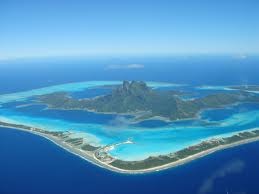
Bora Bora, just the name alone stirs images of beauty, romance, and adventure and rightly so.  You would be hard pressed to find a more beautiful setting in the world.

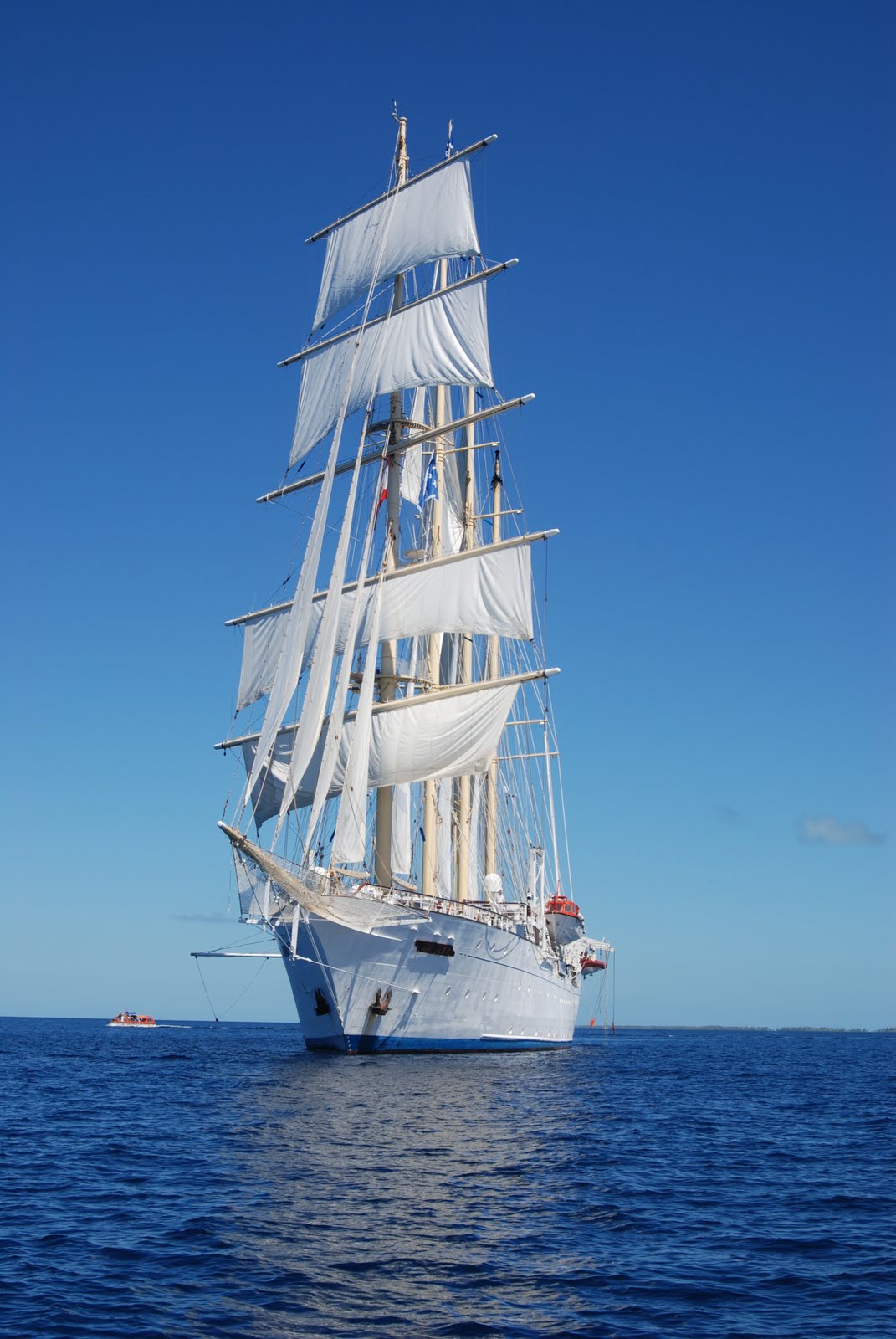
 I had the pleasure to live in French Polynesia aboard the Tallship Star Flyer for about 8 months leading groups of divers from all over the world.  I logged hundreds of dives in locations like: Tahiti, Bora Bora, Moorea, Huahine, Tahaa, Raiatea, Rangiroa, and Fakarava, but I want to start with one of my all time favorites.

 Bora Bora, The Pearl of the Pacific, is located in the Society Archipelago.  This of one of 5 (sometimes 6) island groups that make up French Polynesia.  Society Islands, Marquesas Islands, Austral Islands, Tuamotu Islands, Bass Islands (often considered part of the Tuamotu’s), and the Gambier Islands.
A little history of French Polynesia.  The roughly 118 islands, Motu, and atolls that together form what we call French Polynesia are home to just under 275,000 people.  Over 60% of who reside on the Island of Tahiti.

These islands were formed around 5-6 million years ago by volcanic activity in the region.   The region was claimed by the French in 1842 and declared a French Protectorate, in 1946 it was re-declared an Overseas Territory of France and most recently in 2004 it was designated a French Overseas Collectivity.  This basically means that it has its own local assembly and government but ultimately it is part of France.  First discovered in 1521 by Ferdinand Magellan of Portugal and later was explored by, among others Captain James Cook of England.

The Polynesian language does not have the letter B and the true name is Pora Pora meaning “first born” as it is said that it was the first Island that the god Taaroa pulled from the turquoise seas. Cook’s Bay today is a pristine port located on the Island of Moorea.  

During the Second World War Japan had planned to make the area part of its own empire and American forces established a supply base on Bora Bora.  Approx. 5,000 American troops and about 20 American ships fortified with multiple cannon established at strategic points around the island in what was called “Operation Bobcat” Many of these cannons are still present today on majestic Mount Otemanu the remains of an ancient volcano that is the centre point of this Island gem, and those gun placements are a popular site tourists still visit.  Well a Japanese attack never occurred and I have heard it said it was the best place to spend the war.  According to a local I met on the Island the biggest medical concerns were “sunburn and syphilis” and at the wars end many of the troops remained behind with their Polynesian wives. 

Bora Bora was the setting for the famous Rogers and Hammerstein musical “South Pacific” and today many visitors still visit the local landmark “Bloody Mary’s”  bar which is one of the oldest business’ on the island and has it’s own dock on the breathtaking lagoon.  Tourism, vanilla, coconuts, and the famous black pearls drive the local economy.
  The people are very friendly and at first encounter many North Americans are unsure how to take it.  It is not uncommon at all for a local to sit down beside you on the beach and start talking to you like they are a long lost friend.  You will not often be harassed by merchants, peddlers, and time share bandits.  In fact if you do choose to browse the local shops and booths in many cases you will just get a pleasant smile and they tend to wait for you to ask them questions.  However anyone you meet will have a friend with a small Pearl Farm where you can find deals well below the cost of most of the larger jewelers and pearl exchange. 

 I myself made a good friend, Ray an American surfer, and diver in Huahine that came to the Island in the 1990’s chasing the perfect wave and the endless summer.  He fell in love with the Island and also met his wife and started a family.  He runs a small pearl farm and has build a quaint little shop in a huge tree in his backyard he calls “The Pearl Tree house” I found him to be a good honest man and his pearls were about 1/3 of the cost you will find them in the Capital of Papeete.  Hey Ray there’s a plug for you buddy! 

 Now that I have shared a little bit about this south pacific marvel let’s get to the good stuff, the diving!  Where do I start?  I guess I will start with the best known dive site Motu Tapu located just east of the Pass, which is the only way into or out off the lagoon.  This site is anywhere from 30’ to a max 125’ though most of the dive can be done at 30-40’ for max bottom time and you really won’t see any more at a deeper depth.  The site is marked with multiple buoys and is a popular spot for shark and ray feedings and snorkelers.  The visibility is well over 100’ and the coral in incredible. 

 They have had an ongoing problem with “Crown of Throne” it is a starfish type invasive species that tends to ravish the local coral.  However the locals are doing all they can to preserve this resource.  When you pull up your French local guide, present on every dive as dictated by French law, will secure the boat to one of the moorings and shut the motor off.  This action tends to produce an effect I call Pavlov’s sharks.  Because this is a popular shark feeding location the sharks are conditioned to the sound of the boat motors and when the shut down they know it is dinnertime.  You will usually see 5-10 black tip reef sharks measuring 3-5 feet in length they usually stay mid-column and will follow you throughout the dive.  They have yellowish eyes and I honestly was a little afraid of them for my first dozen dives or so, but really harmless they just add to the excitement. 

 On the bottom are the real stars of the shows.  Large lemon sharks 10-14” in length patrol the sea floor usually 3-5 of these beautiful fish can be seen at any time during the dive and make a great photo opportunity.  No there are no cages, or chain mail, boom sticks or James Bond types with harpoon guns protecting you.  You don’t need them.  Believe me the sharks really have no interest in you at all. 

It is pretty scary and I remember my first dive with them.  Before we went out I was lowering my Zodiac from the davit on my ship.  The bowline was caught up on some gear and I gave it a big pull, well it came free and I launched it at my head and the carabineer on the end struck my forehead and I started to bleed.  I knew this was a shark dive and I have heard how the sharks will be jolted into a feeding frenzy by the presence of blood so I went to our local guide Terry.  “Hey Terry I just cut myself and I am bleeding here should I still dive?”  he looked at me and said in his strong French accent “are you worried that the salt water will sting you?” and I had not even considered that so I guess I looked at him with a dumb look and said “No” then he cracked a huge smile and said”Ah, you worry about a shark attack?’ at this point I had no idea how to respond so I maintained the same dumb look and simply shrugged my shoulders.  Then Terry’s coy smile instantly transformed into a full belly laugh and I was more than a little ashamed of my inexperience. When he was done laughing at me he assured me I would be just fine and had nothing to worry about.  Honestly seeing his reaction to my concern really helped give me the confidence I needed to proceed with the dive.  If he thought it was that funny I must have nothing to worry about. 

 That was the first of over 50 dives I did at Motu Tapu, incidentally I was not injured on any of them nor did I see anyone else get molested in any way.  However I did recount my shameful tale almost every time I led a new group of divers to the site.  I think my misfortune was a valuable tool in helping people get over their own misconceptions about sharks. 

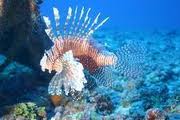
Among the other residents here you will find, some of the biggest Moray eels I have ever seen in my life, some of them have heads the size of a St. Bernard, hump head Maori wrasse, napoleon fish, titan trigger fish, turtles some octopus,  and if you are lucky you may even see the odd humpback whale.  With the visibility as endless as it is here and the abundance of sea life you can shoot a lot of great pictures here.  It is only one of several superb dive sites on the Island and in future posts I will share some more with you.

  Due to the remote location of French Polynesia, (about halfway between South America and Australia) things can be pretty expensive.  There are several World Class resorts including the InterContinental, the Bora Bora Lagoon Resort and Spa, the Four Season, the ST. Regis, and Sofitel to name a few.  These resorts offer over water private bungalows and room service delivered by kayaks and amazing spas and all of the luxuries imaginable.  Also you can take advantage of one of the many “pensions” similar to a bed and breakfast and plenty of live aboard boats that can bring to costs under control. 

 There are plenty of great places to eat as well though you will not recognize a single chain or franchise on the Island.  Send me an e-mail I will point you in the right direction.  This Island is truly a rare gem.  If you are looking for something out of the ordinary in a vacation, look here.

Thursday, June 30, 2011

Diving the Cenotes-Playa Del Carmen, Mexico


I have had the opportunity to dive some of the most memorable places the underwater world has to offer but I think it would be hard to top the surreal, almost spiritual experience of the cenotes of the Riviera Maya Mexico.

   I was not planning to dive these majestic clear freshwater cathedrals when I went to Mexico.  In fact I only hoped to dive some of the many fabulous open water sites that Play Del Carmen has to offer.

   I took a cab from my resort to Playa Del Carmen.  My mission was to walk around and explore some of the many dive shops lining the narrow roads of this small tourist town.  I stopped in 7-8 shops and spoke to some of the staff and bought a couple T-Shirts.  Some people seemed to busy to talk to me, some seemed too interested in getting me in the water in 10 minutes.  Some even wanted me to sign up to tour a timeshare in the area.

Eventually I walked into Phantom Divers and I was greeted by a lovely friendly young lady who asked me what type of diving I was looking to participate in.  She asked lots of questions but was not at all pushy.  She talked about a few recent dives they had enjoyed and showed me some video that she was editing.  I felt pretty comfortable and before long I was sitting back enjoying a pineapple juice and trading dive tales. 

  Within 20 minutes a group of divers returned from the morning dive and they were talking about their adventure.  A couple of the divers were fellow Canadians and they told me they had just finished their 9th and 10th dives with Phantom Divers.  They were a living testimonial to the operation.  The dive master was busy washing gear while the owner/instructor poured himself a pineapple juice as well. I ended up spending another hour in the shop as they planned the afternoon dive.  I knew I had found my shop.

  I had no intentions to dive that day therefore I chose to leave my gear back at the hotel.  When they were starting to assemble the gear for the afternoon dive I was invited to come along for the boat ride.  I accepted the invitation as I always enjoy any time spent on, near or under the water.

 The dive was on Turtle reef and was only about 35 feet and I even took the opportunity to cool myself from the afternoon sun by snorkeling above the divers.  I had a great time and made some new friends and before I left a few hours later I had signed on for 4 dives the following day.  They were memorable dives on there own and I even had an unbelievable stroke of luck by encountering a Whale Shark. I will be writing about that particular dive in a future blog for sure but for now I want to get back on the topic of Cenotes.

   As I said I had no intention on diving cenotes and quite honestly knew little about them and had never taken any tech training at all prior to this trip.  However after my first four dives that were all awesome I was trying to plan my next day’s dives.  It seemed the boat was going to be going to the same dive sites that we visited that day.  Though I enjoyed the dives I always like to see something new.

 The instructor asked me if I would be interested in going into a cenote.  As an advanced open water diver I did not feel that had the necessary training to go poking around a cave system.  I was assured that the cenotes we would be diving would not require the specialized training or gear that I was always told I would need to go cave diving.

 Well they must have been pretty convincing because before I left the shop I had committed to 2 dives in the famed cenotes the following day.  I was both excited and not just a little nervous about what I had got myself into.  Now before I get into the dives themselves let me explain to you what a cenote actually is.

 Cenote comes from the Mayan word dzonot which means “Sacred well” and believe me there is no better words to describe them.  They are ancient passages carved through the limestone over millions of years. Scientists believe that a huge comet struck the earth near Puerto Chicxulub over 60 million years ago.  This event many believe led to catastrophic changes in the topography, water levels, and even the extinction of more than ½ the living organisms on the earth at that time.

  Water levels in the ocean are thought to have dropped by almost 300ft.  Large formations of solid limestone that previously made up the sea floor now rose hundreds of feet above the surface.  As you explore some of these cenotes you can see evidence of this in the many ancient fossils found within them.  This global event left billions of gallons of water displaced at higher levels inland and over the next several million years this water, mixed with carbon dioxide created by decomposing biological matter created a mild carbonic acid that eventually eroded the limestone and allowed the displaced groundwater to carve hundreds of miles of caves and caverns as it followed it’s natural path to lower levels.

   These passages today are filled with the most crystal clear water that you will ever see in your life, so clear it almost seems like you are magically floating through the air if it were not for the telltale bubbles that we divers leave behind.  The water itself is a comfortable 77*- 82* and the minerals that have seeped down from the jungle above have created a kaleidoscope of colors that stain the many stalactites, stalagmites and speleothems  and give them there color.

  This global event set in motion so many millenniums ago has created one of the largest and most unique underground cave systems on the planet.  To date hundreds of cenotes of all sizes have been discovered and it is believed that there are likely 10 times as many yet to be discovered.  This ensures that the Cenotes of the Yucatan peninsula will be a dive Mecca for generations to come.

 Now back to my dive.  I showed up at 7 30 am at the shop.  It was myself, another diver Todd, and a dive master that I had not met on the previous dives.  He was a man of small stature and his English was a bit weak but he smiled and nodded to almost everything that either Todd or I had to say.

  In front of the store were 3 Suzuki 4 wheel ATV’s with gear already tied to the cargo racks, AWESOME!  We drove through the jungle for almost an hour and that alone was worth the mere $140 I paid for the pleasure of this days dives.  We pulled to a stop at a pile of rocks in a small jungle clearing and our guide started to gear up.

 We were supplied with the standard aluminum 80ft3 cylander  and a flashlight.  Our guide had what appeared to be at least a 120ft3 tank and a 20ft3 pony bottle.  He also sported a wrist mount LED light and a C-8 handheld tethered to his BCD.  I felt a little underdressed but geared up all the same. 

We walked down some natural steps in the rock and entered a cave right out of Tom Sawyer.  I was already so impressed we walked down a wide passage and our guide pointed out some broken stalagmites and waived his hands back and forth as he said “No foot, no foot” it is good to see conservation is present even in a jungle cave. 

  The passage ended at a small pool and we slipped on our fins and donned our masks and before you can say “no foot” we were in the water.  We had a small surface swim where our guide aimed his light to the ceiling of the cave where stalactites rich with color seemed to emerge from every inch of the surface.  Beneath us we could see some fossils that appeared to be seashells and I pointed them out to Todd as we made our way to the far end of this underground oasis.

 Our guide switched to his regulator and popped us a quick thumbs down and was gone from site.  We followed and just as we descended about 8 feet our guide disappeared into what appeared to be a shadow in the wall.  We followed and the passage opened up to aprox.. 15-20feet around, there was a small air pocket above us that gave me a little comfort knowing that if something was to go wrong I could surface if I needed to.  There were tree roots emerging from the sides and dangling from the ceiling but not a hint of silt. 

  The bottom seemed to be sandy and again produced no silt at all.  It was awesome.  We made our way through a few gentle bends and though the sides narrowed in places it never got to less than 10 -12 feet across. There were so many formations that I later found were called speleothems they almost look like reddish brown corral.  They are created by mineral rich water seeping from above when the caves were dry. 

  Ahead I could see the passage opening up wider and a strange glow was visible.  Our cave opened to a huge cavern there were several small holes that allowed sunlight to make its way into the water.  The water was freshwater at the surface but below was now a pocket of warmer saltwater and the effect called Halocline and it was like a fog underwater and when the sunlight passed this phenomenon it created the most amazing illusion. 

  We turned off our own lights and just admired the lightshow being produced by the sunlight on this eerie fog.  It was like nothing I have ever seen before or since.  We surfaced and played our lights across the ceiling again admiring the art that Mother Nature had been working on for so many millions of years.

  The cavern was the size of a small gymnasium.  I could not help but feel like I was truly part of an elite few souls in the history of the planet that have had the opportunity to witness this site.  We spent some time exploring the cavern and some small passages that led out in different directions and then returned down the main passage we entered through.

  We got back to our ATV’s and our guide broke out some sandwiches and pineapples and pop.  As we ate he busied himself changing our tanks.  I was a little sad that I still had almost 1100 PSI remaining because I felt like I missed some bottom time.  Todd had 900 I later learned that diving in an overhead environment the 500PSI rule is not the generally accepted rule. 

  As we were eating and our guide was changing our tanks I sneaked a quick peak at his pressure gauge and saw that he was still a little over 2000PSI and I was instantly humbled.  Well lunch was over and we mounted our machines and headed further into the jungle.

   After maybe 20 minutes we parked our ATVs half off the trail and half on still.  This did not concern me because in the hour we were riding in the jungle I only saw an old man and 2 young children on a horse that looked like it should have been sold for dog food years ago and that was only a mile or so into the jungle.  I guess it was safe. 

  We walked down a narrow path that I would never have found by myself and suddenly our guide put his arm out across my chest and again spoke his mantra “No foot, no foot” I was looking down to see if I kicked some ancient geological formation and as I did he pushed back the foliage to reveal a dead straight drop about 40-45 feet to a huge pool of water almost 300 feet across. I was standing half a pace from the edge and did not even see it.  No foot indeed.

  He pulled two harnesses from under a plastic trashcan and said easy easy, and then pointed to a pile of precariously placed scrap wood that at it’s best could not pass as stairs.  They looked like something out of an Indiana Jones movie.  It was apparent I had a choice to make.  I chose the harness, awesome. 

  We repelled down to the water with gear on I felt like James Bond.  We hit the water and donned our fins and again a quick thumbs down sign and our guide was gone.  Again the water was so clear and warm but the bottom did not look like the sand we had on out first dive.

   As we got to just over 50feet I could smell sulfur and even taste it in my mouth.  That cool halocline again.  We passed through it and almost instantly we were in a forest.  What we were diving was a huge cavern bigger than the first one but it had caved in.  Almost entirely intact.  The whole jungle floor was now about 60 feet underwater.  There were huge old growth trees and big rocks and all around us was this green fog.  I felt like I was in some haunted forest it was so awesome. 

  We explored the haunted forest and then proceeded into a cave that went down to about 85 feet and then started to come up again.  We surfaced in a small cave with a good sized air pocket.  I can not stress to you how awesome these dives were.  I had only done maybe 150 dives at this point in time and nothing I had ever dived before compared to what I was seeing that day.

   We then retraced our path back to the haunted forest and after a safety stop we surfaced.  Our guide shrugged out of his BCD and tied it to the harness we used to repel at the beginning of our dive.  We followed suit and he tied both of our BCDs to the second line.  Then like some sort of hairless monkey he climbed the ropes and disappeared over the top into the jungle.  We watched in awe, then we saw him pull his gear up followed by our own.

   When the ropes came down again I was hoping our guide who had so far impressed the hell out of me had another impressive trick to show us and would pull us both up the 50 foot cliff.  No such luck.  I watched as Todd tried to climb and made it almost 10 feet before he let go and splashed back into the water.  By that time the Indiana Jones stairs started to look much better than I had given them credit for before.  I started up the stairs and could hear the guide trying to say something to me, I know I know No foot No foot was all I could say and with that my new friend Todd laughed so hard I thought the steps would collapse.

   I survived the climb and by the time I got to the ATV it was already loaded and secure. We drove back through the jungle and eventually made our way back to the shop.  We sat around and enjoyed a couple cold Pacifica and shared our story with the divers that went out on the boat that day.  It was funny because all of the sudden our guide who spoke no English all day was actually speaking to the instructor and hitting on a young woman diver from Ireland.  Todd and I shared a laugh and just assumed he had no interest in talking to us.

 What a day, what an adventure, what a bargain.  I can not urge you enough to dive the cenotes.  It really does not matter what your experience level is or training they are a safe and truly unforgettable dives.


Disney DiveQuest- Epcot Center Orlando Fla.


Disney Dive Quest I have to say that of all my dives this one has to be one of the most memorable.  It is really a beginner dive but I recommend it to any level diver.

  It is at Disney’s Epcot centre in Orlando Florida.  The cost is $175 but if you go online you can usually find a coupon that you can save around $25 but it is well worth the money.  Disney has created one of the largest salt water aquariums in the world at just under 6 million gallons. 


 You do not need to purchase a park pass for the day as they meet you outside the front gates at guest services.  The whole experience lasts about 3 hours and about 45 minutes of that is actually in the water. They supply all needed gear the only thing you bring is a swim suit.  If you have a mask with corrective lenses you can bring that along and they sterilize it prior to the dive.  I have way above average sized feet, Size 18 seriously stop laughing.  So I was allowed to bring my own boots.  They cleaned those for me and boy I tell you they never smelled better.  

First they take you on a behind the scenes tour of the aquarium.  You get to see the filtration system, the veterinary dept and where the food is prepared for the approx 6,000 inhabitants of the facility.  It is most likely the cleanest kitchen I have ever scene, I would guess it to be more hygienic than any of the restaurants in the whole park.


  The aquarium houses several white tip reef sharks and a brown Caribbean shark.  We were told that when it comes to feeding the sharks they are fed more than 4 times what they would eat in the wild so they don’t even bother with the other fish in the tank.  They are fed in the dark with a pole and they will not feed them if there is even cleaning staff in the viewing area.  This is done so that the shark will never associate humans with food.  I think this a great idea and shows that conservation is a big part of the program.  I have been on shark feeding dives in the past and I understand it is a big tourism draw but I personally do not believe in the practice. 

 After the tour we are brought into a conference room and there we signed the standard waivers and showed our c-cards.  They give a pretty thorough brief of the dive and instruct us that we are not to touch any of the inhabitants and we are introduced to the dive team.  It is really a very well run setup.  From there we go to the change rooms and get ready for the dive.  I guess while we are in the conference room they are somehow laser measuring each of the divers because when we are escorted to the deck all of our gear is set up waiting for us and they have everyone sized and sorted before we are even there.  I love dives like that. 

Once we are geared up we are sent out to a buoy in the middle of the tank and told to wait for the group.  We all descend together and regardless of your level the dive masters check out your skills before they pair you up and send you on your way to dive your own dive.  There are some neat coral formations manmade of course but pretty realistic, minus the all too frequent bleaching we see nowadays.  There are some Eagle Rays, Giant Turtles, Jew fish groupers, and so many other varieties of fish that it would take forever to start listing. 


Around the outside of the aquarium is the public viewing area so you can interact with the guests and your family can witness your underwater prowess.  Also there are some restaurants at the lower levels so you can harass the diners during your dive. 

There is a small dive bell with an acrylic dome that you can stand in and remove your mask and have a good photo op, the video is sold at the end of the dive.  They explain during the briefing that the sharks swim in a pattern so if you want to get up close and personal watch them as they swim by a rock or coral formation and then settle in and wait for them to return and they will go right over top of you.  What they did not tell me was that pattern was not a big circle but actually a figure 8 pattern so when I say the big brown Caribbean swim over a rock I settled in and waited for him to come back.  Just as I was thinking he was gone and I was wasting valuable bottom time the shark reappeared from behind me just over my head.  As an almost exclusive fresh water diver with very little salt water, and no shark experience at that time I did my best to remember the part of the tour that said how well fed these sharks were and that helped me through an otherwise stressful moment of my dive. 

 One notable incident during my dive was as I was waiting for my turn in the dive bell I felt a tugging on my left shoulder.  The dive buddy I was assigned had already felt the need to tug my fin, poke me, and tap my mask to point out every fish that swam within 20 feet of us so I assumed it was him again and ignored him.  Then the tugging became more of a pinch and when I turned around I saw that it was in fact a giant turtle and I was standing directly in front of a feeding tube fixed to the wall.  That gave me a bit of a scare but really it was not painful. 

 I finished the dive and surfaced, I was smiling so much I risked drowning from the water that was pouring in my mouth from around my regulator, what a dive.  I was not the only one who enjoyed the dive.  There were 6-7 other divers with me and they were all talking at the same time.  Did you see the, and the, how about that…. It was obvious that the dive was a hit with everyone. 

We shed our gear went and changed and returned to the conference room where we viewed the DVD of our dive and debriefed.  The Dive master asked us what we thought and everyone raved about the whole experience.  I mentioned my near death experience with the turtle and I was told I should go to guest services to tell them.  I shrugged of the suggestion and said it was really nothing it did not hurt.  The dive master said no really go to Guest services “everyone leaves Disney happy” 

 So after I purchased my DVD I did head to guest services and told them I got bit by a killer turtle.  They seemed genuinely concerned for my wellbeing and asked if I was ok.  I assured them that I was ok and I would not be suffering any long term damage from the incident.  They then asked me how many members I had in my family; I said 6 without blinking an eye and poof from her printer out popped 6 1 day park hopper passes to Disney world WOW!  $175 dive of a lifetime, and I have 6 park passes good for 20 years!

Yeah it seems everyone does leave Disney happy.  Great dive, great people, an absolute must. Just watch the turtles!

Wednesday, June 29, 2011

Welcome to my blog! Wow did I just say that?

Well here I go this is my first attempt at creating a blog that will hopefully be of some value to you. 

 I admit that I know little about blogging, in fact I have never even read a blog in my life before now so I ask for a little patience from you as I learn the in and outs of the “blogosphere”

 Over the past 12 years I have had the opportunity to dive some of the most awesome sites available to any level of diver.  I have had well over 1,000 dives around the world and witnessed some truly incredible things.  I have been on countless ship wrecks, caves, under ice, and encountered many different types of sea life.

I have shared the water with sharks, whales, mantas, stingrays, octopus, but the most interesting sea life so far has been of the two legged variety.  True there are many strange things to be seen under the sea but I would have to say the strangest by far would be some of the people who share my passion for exploring the deep. 

I love a good story, both telling them and hearing the stories of others.  I will try to keep the stories as close to accurate as I can but as the saying goes, never let the truth interfere with a good story.

 As time goes on I will try to recount as many of those dives as I can and I encourage you to send me your stories.  I would like this to become as interactive as I can.  So please feel free to send me your tales of the deep.  Your favorite dives, your favorite times, lets see where this goes.

Scuba DIving the Wreck of the George A. Marsh Kingston Ontario, Canada


The George A Marsh.  Seldom will you ever find a more beautiful shipwreck than the George A. Marsh.  The Marsh was a 135’ three-masted schooner built in 1882 at a shipyard in Muskegon Michigan.

  Originally it was built as a Lumber carrier and took her name from a predominant Chicago lumberman.  She was sold in 1914 to a businessman from Belleville Ontario and was used primarily as a coal carrier until she met her end during a violent storm on Aug 8th 1917 a few miles from Simcoe Island near Kingston Ontario.  GPS info: 44*07.690’/076*36.260. 

   She had set sail from Oswego NY with a cargo consisting of 500 tons of goal destined for a hospital in Kingston.  Though she had made the trip dozens of times in the past this voyage was a little different as the summer was at its peak and the weather was supposed to be favorable so Captain John Smith had allowed his crew to bring their families aboard for the trip.  The captain himself brought his own wife and 6 children along.

   In all there were 14 souls aboard that fateful day. As the newspapers reported later 12 souls, 7 of them under the age of 9 years would perish including Captain Smith, along with Mrs. Smith and their 6 children. 

She foundered in 85’ of water and the newspapers showed pictures the top portion of the masts still standing high above the surface until they were later blown off by the Army Corp of Engineers as they posed a threat to navigation.  Many a rumor surrounds this particular wreck, for example it is said that the remains of many of the victims were still in the wheelhouse until an overzealous engineer decided to lay a charge of dynamite that toppled the structure and emptied the remains across the deck and on the lakebed. 

It is said that novice divers had several times found bones and brought them to the surface only to be told that they were to remain on the wreck as it is considered a gravesite.  It is rumored that some divers finally relocated the remains not far from the wreck to prevent them from being disturbed.


  Another story suggests that Captain Smith actually survived the tragedy and in his grief at losing his family secretly moved to Oklahoma never to sail again. Only to reveal his tragic story in 1927 shortly before he died, again.  What would a shipwreck be without mystery? 

 My own experience trying to dive the George A. Marsh is a bit of a tale as well.  I had tried to dive this wreck at least 6 times before I actually got to see her for the first time.  

  On one trip we left Collins Bay under a bright cloudless sky for the almost 30 mile trip to the dive site only to find ourselves caught in a fog so thick we could not even see past the bow of our 32’ cruiser and we were forced to turn back. 

 On another attempt a faulty fuel gauge left us stranded in the middle of lake Ontario until we were towed into port by a fellow diver’s boat.  Again we tried and from the time we left our slip in Collins Bay with a modest 1-2 foot swell we were battling waves that were almost 7 feet and threw our sturdy boat around like a cork.  It was almost as though the wreck of the George A. Marsh was not going to let us visit. 

 Finally after 7 attempts over 3 years plagued by weather, seasickness, and mechanical issues we eventually got to the wreck and what a remarkable dive it was.  The ship is marked with a Buoy that rests in a large block just off her starboard side amidships.

Her 3 large masts lay across the deck where they have rested since they were blasted away. So many years ago.  The Bow is facing north and it is in incredible condition with the lines still running along the bowsprit almost as she is still ready to catch the wind a deliver her cargo loaded almost a century ago. 


 There are plenty of deadeyes to be found and several belaying pins still in place.  Also the remains of a lifeboat that indicates how quickly the ship went down Towards to stern you will find one of the best preserved ships wheels I have ever seen though it shows some signs of tampering.  It appears that at one point someone has fixed some chain to the wheel to prevent some thoughtless souvenir hunter from destroying a valuable piece of maritime heritage. 

 Also you will find the old cook stove complete with pots and pans laying ready to cook a meal that will never come.  If you swim off the transom and take a look at her stern you will see the sleek craftsmanship of an era in shipbuilding that is gone forever.   It appears that the cargo is still in tact so penetrating below decks is not possible.


Take a minute to look around at the large schools of fish that like to make this wreck home.  Also be aware this wreck is pretty silty so you want to practice your best buoyancy control.  Just a few bad kicks and you will reduce your visibility in no time. 

 Believe me this wreck is such a great dive that you want to enjoy it to its fullest.  There are several charter boats that make regular trips to the George A. Marsh and I would defiantly recommend that any dive trip to Kingston includes a couple dives on this wreck.  One of the greatest wrecks ever!